unpaid advertorial
MENTAL TOUGHNESS TRAINING IN SKYDIVING
By guest author Pancho Campo
When I was trying to become a professional tennis player over 30 years ago, I didn’t reach any higher in the rankings because, although I had very good strokes and an excellent physique, I couldn’t control my emotions and nerves. I used to get so stressed and nervous before and during a match, that I completely lost control of myself. This situation became so uncomfortable that I decided to quit playing and become a coach with a clear goal: to teach and help my players in the areas where I struggled. Keep in mind that tennis is considered one of the most mentally demanding sports.
Before I took up skydiving a few years ago, one of the questions that always roamed through my mind was, how stressful would it be to jump out of a plane? Would I suffer like I did in tennis? How can a skydiver confront fear and manage their nerves? Now, with over 500 jumps in more than 20 drop zones and a D License, I understand the sport much better. I’ve realized that there are several points in common with tennis. Both are individual sports; in skydiving, although you jump in groups and even in large formations, you are mostly on your own, specially once you break off. When I was a tennis player, receiving coaching during the match was forbidden. In skydiving, it is almost impossible to have an instructor help you during freefall to manage your fears and nerves.

Pancho Campo’s HALO Skydive
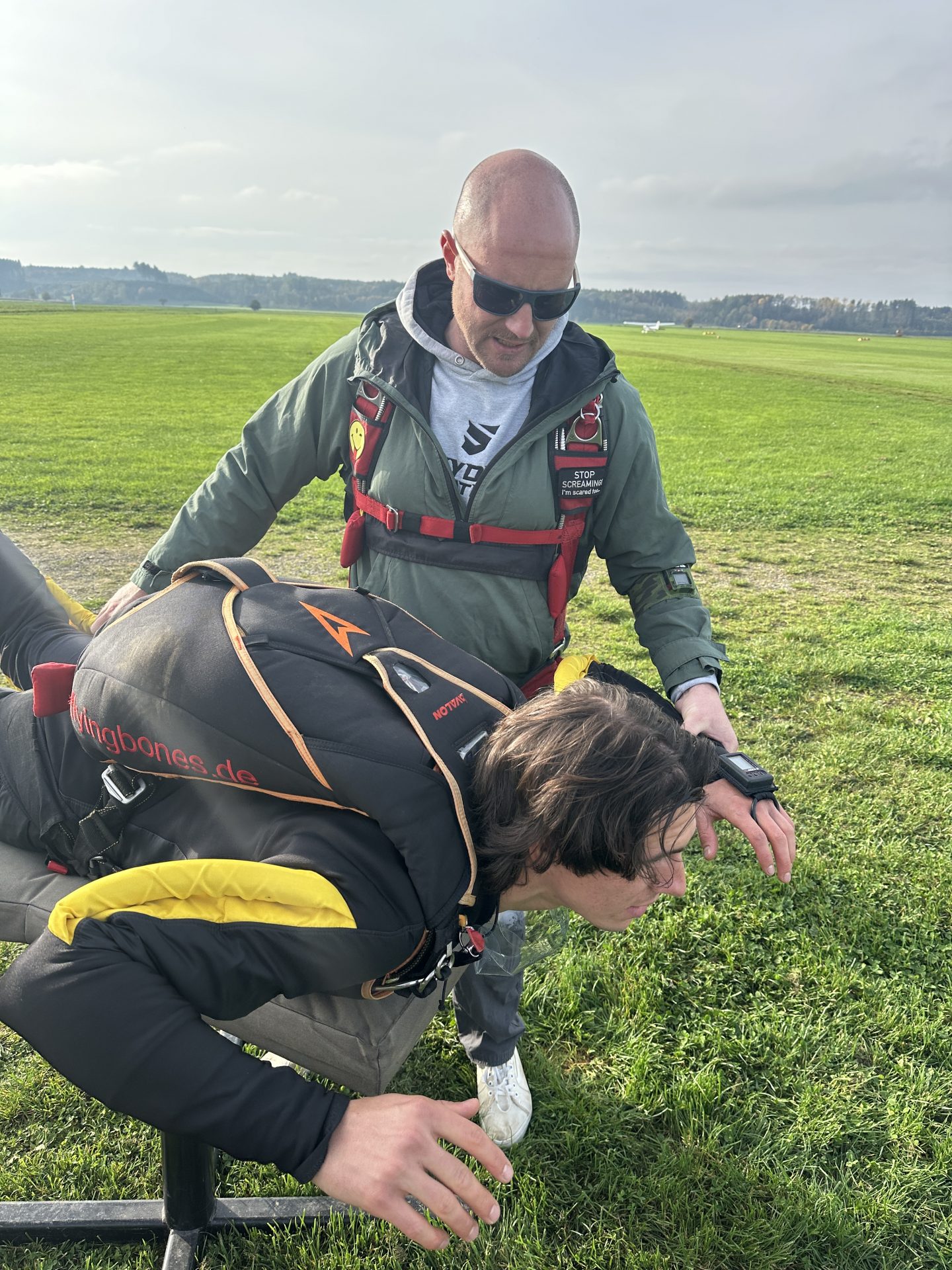
Skydiving coach and Skydive Nation Advisor/Ambassador Jannik Kiebler-Schauer always goes all in to help his students build the confidence they need.
The more I travel to different drop zones and experience various specialties of skydiving, the more I realize that, although skydivers tend to be quite fit physically, very little emphasis is placed on mental toughness training. We participate in skill camps, attend boogies, and enroll in canopy piloting courses, yet the mental aspect is often overlooked. While there are similarities with sports like tennis, in skydiving, one small error can cost you your life or lead to serious injuries. Let’s not forget that under stress, the chances of making mistakes and poor decisions increase considerably. In tennis, if I made a mistake, I may lose a game or a match, but my physical integrity was not at risk.
Mental training in sports has become an integral part of the training for athletes and teams, especially among top competitors. The distinction between winning and losing, particularly in individual sports like tennis, golf, motor racing, and athletics, relies heavily on mental toughness, which accounts for more than 80% of performance.
Skydiving requires individuals to control their emotions, manage fear, and maintain a cool head in case of emergencies. I have attended swooping competitions and various tournaments as a spectator, but I have never encountered a skydiver receiving assistance with the mental aspects of the sport. I also see many AFF and tandem instructors who could greatly benefit from techniques to calm their students and teach them how to be less anxious and nervous.
Areas Where Mental Toughness Training Can Benefit the Skydiving Community:
– As a fun jumper, especially in the early stages, managing nerves and confronting fear can enhance your enjoyment of the sport and lead to better decision-making preventing mistakes dure to nerves.
– In the event that you need to cut away, staying calm and maintaining control over your emotions can help you execute emergency procedures more efficiently.
– As an AFF instructor, mental training can enable you to approach your career more calmly and, most importantly, help your students better prepare for their training.
– As a tandem instructor, you have a significant responsibility for the well-being of your student. You can also offer tips and techniques that will make their jumps more enjoyable.
– Professional skydivers could tremendously benefit from mental training because, like many other sports, the higher the level, the more the difference relies on your capacity to perform under stress.
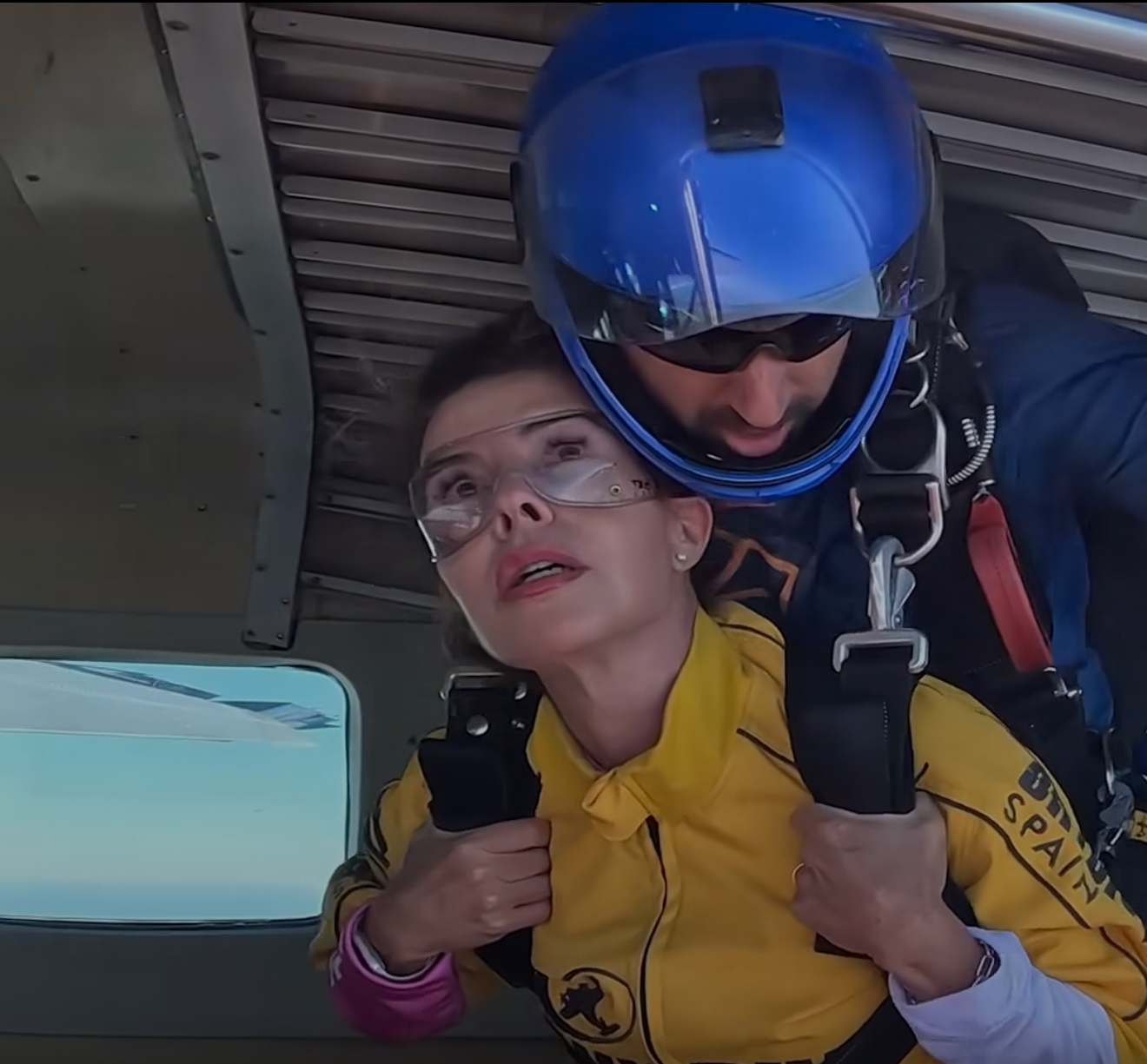
Often-seen: anxious faces at the exit.

Total relaxation: Pancho Campo – He knows how to face his fears.
To support the skydiving community, my team and I have developed and adapted a program which we have previously used very successfully with tennis players, artists, and in the corporate world. This program, known as the SMILE Peak Performance program for skydiving, stands for Sports, Motivation, Inspiration, Leadership, and Energy. The term “SMILE” is also a clever play on words; smiling releases endorphins, which significantly help combat stress and anxiety. The advantage of this program is that it has proven results and is very practical and hands-on.
SMILE is based on three pillars: 1. The knowledge and experience of our group of collaborators, which includes a psychologist, a medical doctor, a nutritionist, a personal trainer, and myself; 2. After retiring from tennis, I opened my own events management company and had the honor of working with numerous celebrities, including sports legends like Andre Agassi, Eric Cantona, and Stefan Edberg, world-class performers such as Sting, Pink Floyd, and Enrique Iglesias, and leaders including President Obama, Vice-president Al Gore, and the Emir of Qatar. During this time, I took the opportunity to engage in conversations with them to learn how they deal with stress, confront fear, and manage their emotions; 3. My extreme experiences, such as being kidnapped in South Africa, HALO jumping in Denmark, and scuba diving under the Arctic ice in Greenland, have provided me with practical knowledge on managing my emotions and performing under extreme stress.

